
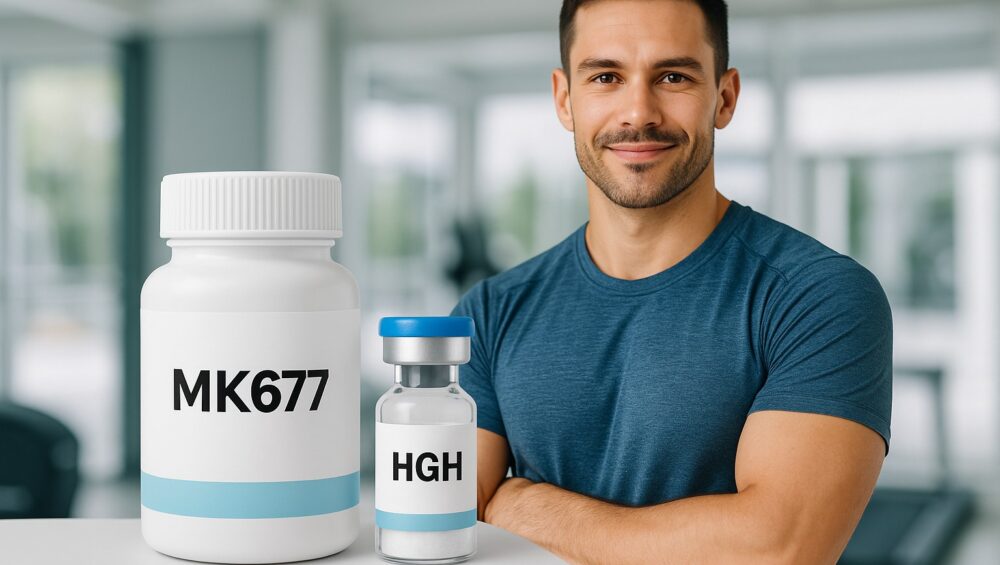
MK677 vs HGH: Which Works Better for Muscle Gains? (2025 Comparison)
For athletes, bodybuilders, and fitness enthusiasts, the quest for optimal muscle growth and improved performance often leads to exploring advanced supplementation options. Two of the most discussed compounds in this realm are MK-677 (Ibutamoren) and Human Growth Hormone (HGH). With both touted for their muscle-building potential, understanding their distinct mechanisms, efficacy, safety profiles, and accessibility is crucial for anyone considering them as part of their supplementation strategy. This article offers a comprehensive, side-by-side analysis of MK-677 and HGH, empowering you to make an informed decision for your muscle gain journey in 2025. For those seeking premium sports nutrition and lifestyle supplements in Kent, the Phoenix Supplements Store | Maidstone, Kent | Sports nutrition & lifestyle supplements (https://phoenixsupplementstore.co.uk/) remains a trusted resource.
Understanding MK-677 and HGH
To properly compare MK-677 and HGH, it’s essential to first establish what each compound is and the primary reasons they are used in the context of muscle growth and sports performance.
MK-677, also known as Ibutamoren, is an orally active growth hormone secretagogue that mimics the action of ghrelin to stimulate growth hormone release. This means that MK-677 works by triggering the body’s own production and release of growth hormone (GH), rather than supplying it directly. Its oral administration makes it particularly attractive for individuals seeking a non-injectable option.
On the other hand, Human Growth Hormone (HGH) is a peptide hormone consisting of 191 amino acids, primarily used to treat growth hormone deficiencies. HGH is produced naturally in the pituitary gland but can also be synthesized and administered via injection for therapeutic or performance-enhancing purposes. Its ability to influence growth, metabolic processes, and tissue repair makes it a staple in both clinical and athletic circles.
While both compounds ultimately aim to elevate growth hormone levels in the body, their routes of administration, legal status, and underlying biological mechanisms differ. MK-677 typically falls into the category of research chemicals and is not approved for medical use, whereas HGH is a strictly regulated prescription medication. This distinction influences not only their accessibility but also their safety, efficacy, and potential side effects, as will be explored in the following sections.
Mechanisms of Action
Understanding how MK-677 and HGH work at the physiological level sheds light on their similarities and differences, especially in terms of muscle growth and overall anabolic effects.
MK-677 functions by mimicking the action of ghrelin, a hunger hormone that also stimulates growth hormone secretion from the pituitary gland. By binding to ghrelin receptors, MK-677 prompts the pituitary to secrete more endogenous growth hormone as well as increase levels of insulin-like growth factor 1 (IGF-1), a critical mediator of muscle growth and recovery. The oral bioavailability of MK-677 allows users to avoid the discomfort and inconvenience of injections, making it a user-friendly option for many.
HGH, in contrast, provides exogenous growth hormone directly to the body via subcutaneous or intramuscular injection. Once in the bloodstream, HGH binds to receptors in various tissues, activating signaling pathways that stimulate protein synthesis, promote fat breakdown, and enhance cellular regeneration. The use of pharmaceutical-grade HGH ensures precise dosing and predictable effects, which is why it remains the gold standard for treating growth hormone deficiencies.
Both MK-677 and HGH ultimately boost circulating levels of IGF-1, a peptide hormone that is strongly linked to muscle hypertrophy and recovery. However, the way they achieve this—one by stimulating the body’s own production and the other by direct supplementation—results in different patterns of hormone release and potentially divergent long-term effects. The unique pathways each compound utilizes play a significant role in their safety profiles and the outcomes users can expect.
Efficacy in Muscle Gain
The principal reason athletes and fitness enthusiasts turn to MK-677 or HGH is to maximize muscle gain and accelerate recovery. Evaluating the available scientific evidence and real-world outcomes can help clarify which option might deliver superior results for muscle growth.
MK-677 is highly regarded for its ability to steadily elevate growth hormone and IGF-1 levels over time. In a study on healthy older adults, MK-677 increased IGF-1 levels by approximately 60% over six weeks. This substantial increase in IGF-1 correlates with enhanced protein synthesis, improved nitrogen retention, and accelerated muscle growth. Anecdotal reports and early research suggest that users often experience improved muscle fullness, faster recovery from intense training, and even mild fat loss due to the metabolic effects of higher growth hormone levels.
HGH, with its direct administration, delivers powerful anabolic and lipolytic effects. When used as prescribed in clinical settings, HGH has been shown to increase lean body mass, decrease fat mass, and support connective tissue repair. Athletes using HGH for performance enhancement often report significant improvements in muscle density, vascularity, and overall physical conditioning. However, these outcomes are dose-dependent and can vary widely based on individual factors such as age, sex, baseline hormone levels, and training intensity.
It’s important to note that while both compounds facilitate muscle growth, the rate and magnitude of gains may differ. MK-677, by mimicking natural hormone patterns, tends to provide a more gradual, sustained increase in muscle mass, making it suitable for long-term use. HGH, on the other hand, can produce faster and more dramatic results but carries a higher risk of side effects, especially at supraphysiological doses. Ultimately, the choice between MK-677 and HGH should be guided by personal goals, risk tolerance, and a clear understanding of how each compound works within the body’s complex hormonal environment.
Side Effects and Safety Considerations
While the muscle-building benefits of MK-677 and HGH are compelling, it’s crucial to evaluate their safety profiles and potential side effects to make an informed decision about their use.
MK-677 is generally well-tolerated, but its growth hormone-boosting effects can lead to several predictable side effects. Common side effects of MK-677 include increased appetite, water retention, and changes in insulin sensitivity. The increase in appetite can be advantageous for those struggling to consume enough calories for muscle growth, but it may also lead to unwanted fat gain if not managed properly. Water retention is typically mild but can cause temporary bloating or puffiness. Perhaps most importantly, MK-677’s impact on insulin sensitivity means that it should be used with caution by individuals with, or at risk for, metabolic disorders such as diabetes.
HGH shares some overlapping risks, such as fluid retention and altered glucose metabolism, but its side effect profile can be broader and more severe with improper use. Potential adverse effects include joint pain, carpal tunnel syndrome, increased risk of diabetes, and, in rare cases, the development of acromegaly (abnormal growth of bones and tissues). Because HGH therapy is tightly regulated and monitored, the risks are generally minimized under medical supervision. Unregulated use, particularly at high doses, significantly amplifies the likelihood of adverse outcomes.
It is also worth considering the psychological and legal implications associated with these compounds. MK-677, due to its classification as a research chemical, is not subject to the same rigorous quality controls as prescription medications. This can lead to variability in product purity and potency, increasing the risk of contamination or underdosing. HGH, while pharmaceutical-grade, is only legally available via prescription and is closely monitored for misuse in sports and bodybuilding communities. Responsible use, regular health monitoring, and sourcing supplements from reputable providers like https://phoenixsupplementstore.co.uk/ can help mitigate these risks and ensure safer outcomes.
Cost and Accessibility
For many, the decision between MK-677 and HGH also comes down to cost and ease of access. These factors can significantly influence both the practicality and legality of incorporating either compound into a muscle-building regimen.
HGH therapy is regulated and requires a prescription, whereas MK-677 is often sold as a research chemical and may fall into a legal gray area. This means that HGH is typically more difficult to obtain unless prescribed for a legitimate medical purpose, and its cost can be substantial, especially for long-term use. Pharmaceutical HGH is produced under strict quality standards, which contributes to its higher price point.
MK-677, being an orally active compound sold primarily online as a research chemical, tends to be more affordable and accessible. However, buyers should exercise caution, as the lack of regulatory oversight can lead to inconsistencies in product quality. The legal status of MK-677 varies by region and can change as new regulations emerge, so it’s important to stay informed about local laws before making a purchase.
Ultimately, both the cost and accessibility of these compounds should be weighed alongside efficacy and safety considerations. Choosing a trusted supplement provider like Phoenix Supplements Store can help ensure you receive genuine, high-quality products, regardless of which path you choose for your muscle gain journey.
